
Rebluing
Double H Gunsmithing refinishes ferrous metal at our shop in Blanch, North Carolina. Ken Barfield restores worn blue, refreshes guns that have seen hard use, and finishes metal after repair or restoration work.
We have run bluing tanks since early in the shop’s history, and metal refinishing remains part of the regular work we do alongside repair and custom builds. Call or text to discuss your gun and the look you want.
Types of bluing we offer
- Hot bluing (hot caustic salts)
- Slow rust bluing
- Nitre bluing on small parts
Nitre bluing is available on screws, pins, extractors, and similar small parts for that straw-to-blue heat color.
There is a third historic process called Belgian bluing (sometimes associated with early Browning and Fabrique Nationale work). It is a traditional European finish, separate from the hot-salt and slow rust methods we use in the shop today. We do not offer Belgian bluing. If you bring an early Browning or similar gun that originally had that finish, we can discuss hot blue or rust blue as a practical refinish, but we will not claim or reproduce Belgian bluing itself.
Cold blue is reserved for limited touch-ups on crowns and other inconspicuous spots. For a cosmetic refresh of a larger area, we reblue the part or the gun so the finish reads even. Color case hardening is a separate service on our Case Hardening page.
Hot bluing
Hot bluing (also called hot caustic or tank bluing) is the process most people picture when they say a gun was reblued. After polish and prep, the clean steel goes into a hot bath of caustic oxidizing salts. The salts convert the surface of the steel into a thin layer of black oxide (magnetite). The part is then rinsed, neutralized as needed, and oiled so the oxide is sealed and protected.
Because the reaction happens in a controlled hot bath, a full set of parts can be finished in a relatively short shop cycle once prep is done. Hot blue typically reads as a deep, even black-blue with a traditional gloss when the metal was polished that way. It is a strong choice for rifles, single barrels, receivers, and many other chrome-moly parts. Leaving the bore open to the bath also helps put a protective oxide in the barrel, which is one reason hot blue remains popular on working guns.
Hot salts are hard on soft solder and on the spaces between double-barrel ribs. We do not use hot caustic on soldered double-barrel assemblies for that reason.
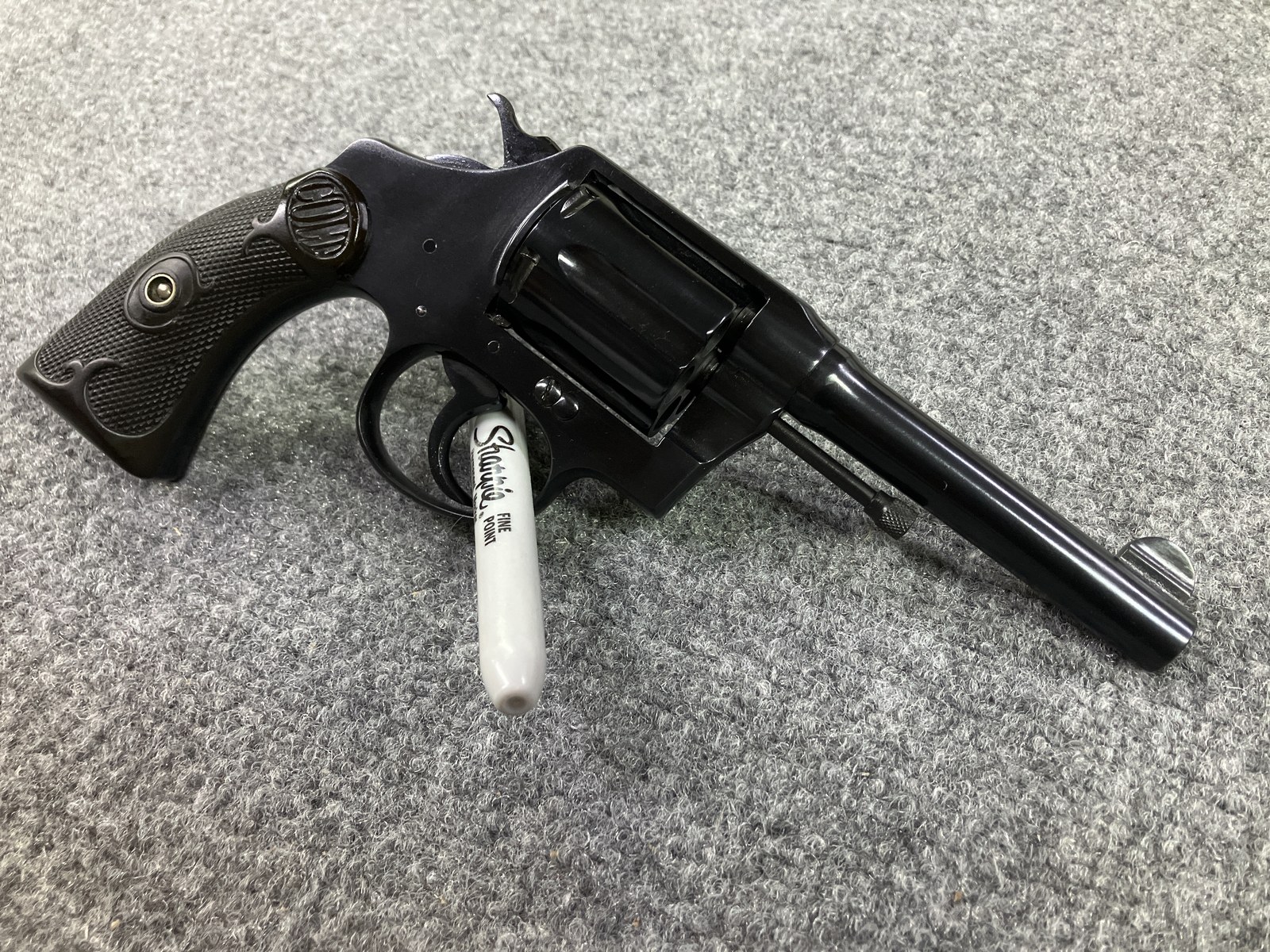
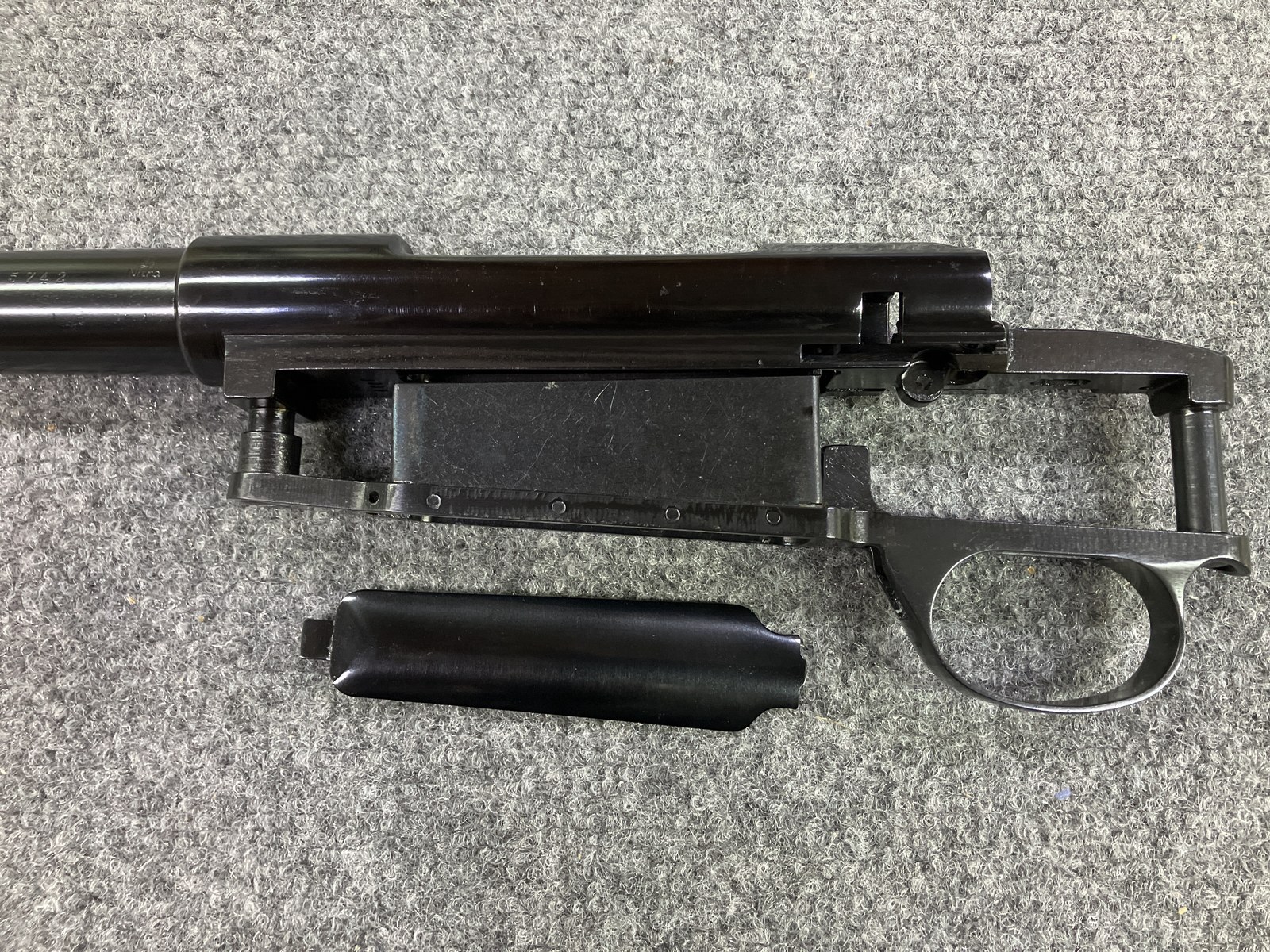
Side-by-side jobs like this make the difference easy to see: older factory blue can pick up a slight magenta or reddish cast, while a fresh hot blue from our tanks on chrome-moly steel usually reads as a dark, rich black.
Certain cast metals take a characteristic magenta color when they are blued. Ruger revolver frames and Ruger No. 1 receivers are especially known for that magenta cast. It is a property of the metal and the bluing reaction, not a polish mistake. When we blue those parts, we will tell you what to expect so the color is not a surprise.
Slow rust bluing
Slow rust bluing builds black oxide by a different route than hot salts. After polish and prep, we apply a rusting solution to the clean steel and let a controlled rust form. The surface is then boiled (or steamed) in water so the red rust converts to black oxide, and the loose oxide is carded off. That cycle of rust, boil, and card is repeated until the color and depth are where we want them. The part is then oiled.
Expect a grayish finish. Rust blue does not read as the same deep, glossy black-blue as a typical hot-salt job. The color is a classic gray-blue to blue-gray (sometimes described as a softer or more muted blue-black). That grayish cast is normal for this process and is part of the traditional rust-blue look. If you want a darker, glossier black-blue, hot bluing is usually the better match.
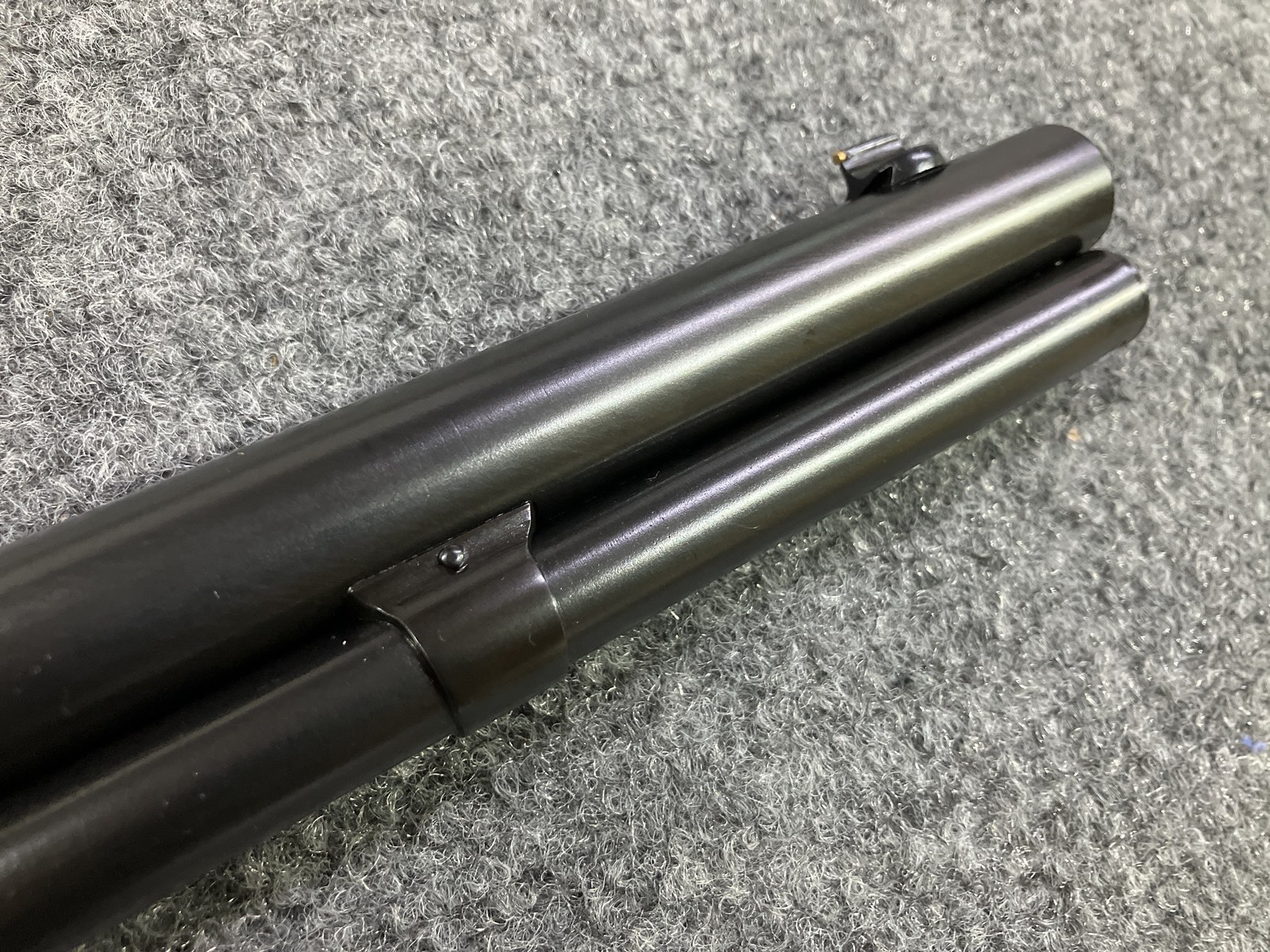
Rust blue takes more calendar time than a hot-salt dip because each coat needs time to develop. It is the process we use on soldered double-barrel assemblies, where hot salts would attack soft solder and can leave unfinished or damaged metal between the ribs. It is also a good choice when you want that traditional grayish rust-blue appearance on a rifle or other part that can take the longer process.
How the two methods differ
- How the oxide forms: Hot blue grows the oxide in a hot caustic salt bath in one main immersion. Rust blue grows it through repeated rust-and-boil coats that are carded between cycles.
- Shop time: Hot blue is usually the faster finish once polish is done. Rust blue takes longer because of the coat-by-coat cycle.
- Look: Hot blue often gives a deep, glossy black-blue on polished steel. Rust blue has a grayish blue-gray finish (softer and more muted than hot blue). That gray cast is expected, not a flaw.
- Best fit: Hot blue for most rifles, single barrels, and everyday refinish work. Rust blue for soldered doubles and for jobs where that traditional rust-blue look is the goal.
- Soldered doubles: Rust blue is the right process. Hot caustic salts are the wrong fit between the ribs and on soft solder.
Both finishes start with careful polish and prep in the shop so stamps and engraving stay sharp. Which process we recommend depends on the gun, the metalwork, and the look you want. We will confirm that when we estimate the job.
Wall hanger treatment
Older guns with a lot of natural patina can get what we call a wall hanger treatment. We clean the gun, apply a couple coats of rust blue without polishing, and blend with Birchwood Casey Plum Brown so the aged character stays. Planning range is approximately $150 to $200.
Cerakote option
We also offer Cerakote in a dark blue (Midnight Blue or equivalent) when a non-traditional coating is a better fit for the metal. On a comparable rifle-scale job, planning cost is approximately $270. It is an alternative finish path, not a layer over a traditional blue on the same surfaces. For the full Cerakote service (H-series solid colors on metal, earth tones in stock, special-order colors), see our Cerakote page.
What the work includes
We polish and prepare the metal in the shop, preserve factory stamps and engraving, apply the finish, and reassemble with function checks. If repairs or barrel work are also needed, we usually complete that metalwork before final refinishing so the new finish is not disturbed later. Wood refinish and other restoration work can be estimated on the same visit.
Current planning times are on our home page lead times table.
Pricing
- Long guns: generally starts at $300
- Handguns: generally starts at $200
- Traditional hot blue, typical rifle: approximately $350
- Complete rust blue with prep: approximately $350 to $400
- Wall hanger treatment: approximately approximately $150 to $200
- Cerakote dark blue, rifle-scale: approximately $270
Every job is estimated after inspection. Extra prep for heavy pitting or prior poor polish is estimated separately. Prices assume payment by cash or check unless we note otherwise. See our Terms & Conditions.
Getting started
Call or text 336-694-5739, or email [email protected]. Tell us the make, model, and caliber, and what finish look you have in mind. We will get you pointed the right way before you ship or drop anything off.