Suppressor Threading

Double H Gunsmithing threads rifle and other barrels for suppressors and muzzle devices at our shop in Blanch, North Carolina. Ken Barfield cuts a clean thread and shoulder so your can or brake mounts true.

Threading is one of our most requested jobs right now. Bring the firearm and, when you can, the suppressor or the mount specs, and we will match pitch and shoulder to the setup.

Broader barrel work lives on our Rebarreling page. Full custom builds that include a threaded muzzle are covered under Rifle Builds. Permanent muzzle-device attachment is covered under Pin and Weld.

What we do

  • Thread muzzles for common suppressor mounts
  • Cut and time shoulders for a solid mount
  • Include a thread protector with the job (knurled or premium blend; see Thread Protectors)
  • Thread and time custom muzzle brakes when the design requires it

Common pitches include 1/2-28 and 5/8-24. Other pitches are available when the barrel and tooling allow. We limit 1/2"-28 to about 6.5mm / .264 and under. Larger bores such as .308 get a larger thread (typically in the 5/8" family) so the muzzle wall stays thick enough and we avoid shear risk.

On some jobs where you need a 5/8" mount, we cut 9/16"-24 on the barrel and use a thread pitch adapter to reach 5/8"-24. Adapters usually run about $40 to $60.

How we thread a barrel
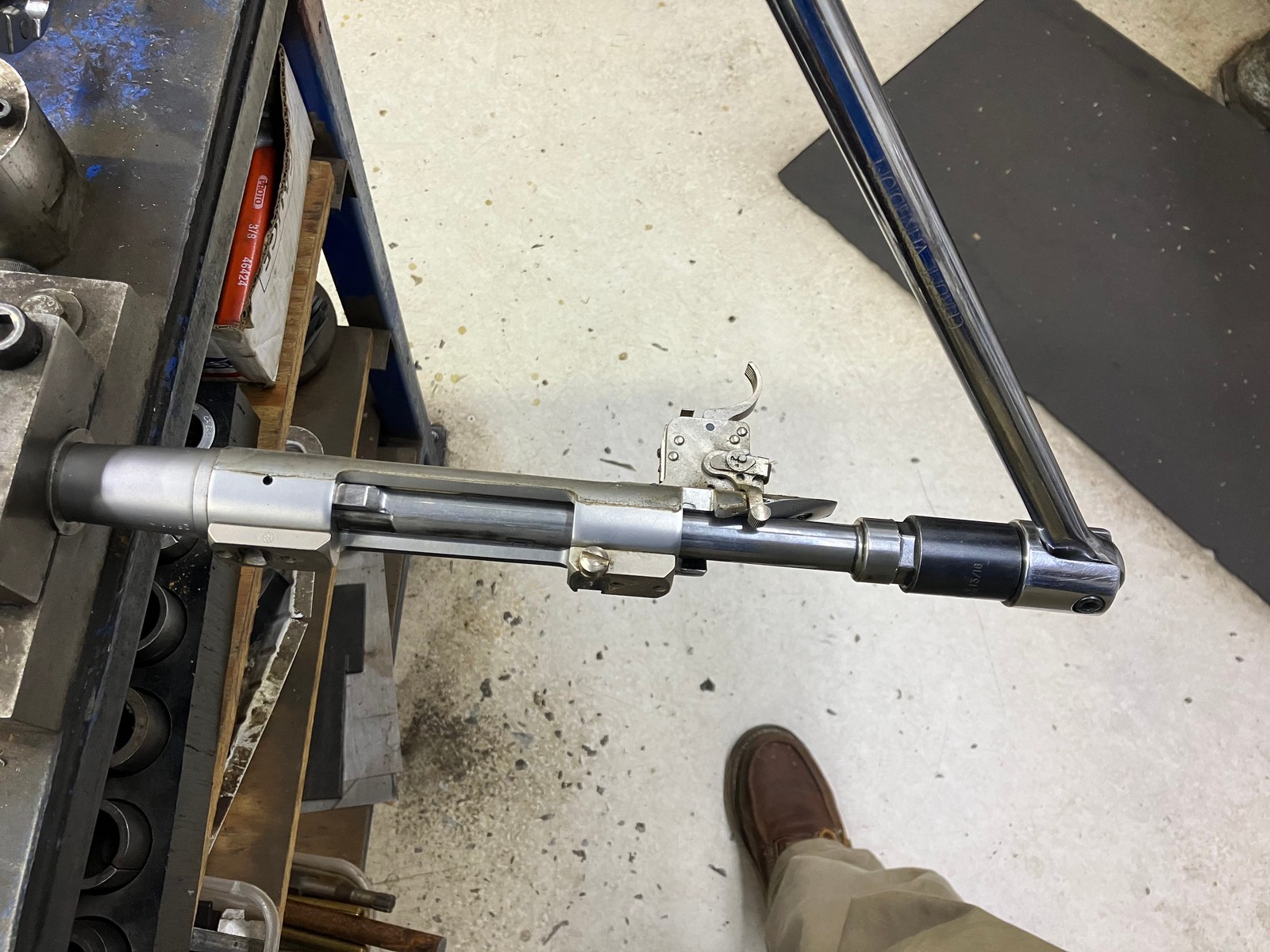
Barreled action held in a barrel vise after it was removed from the stock
1. The barreled action gets removed from the stock and the barrel is placed in a special barrel vise.
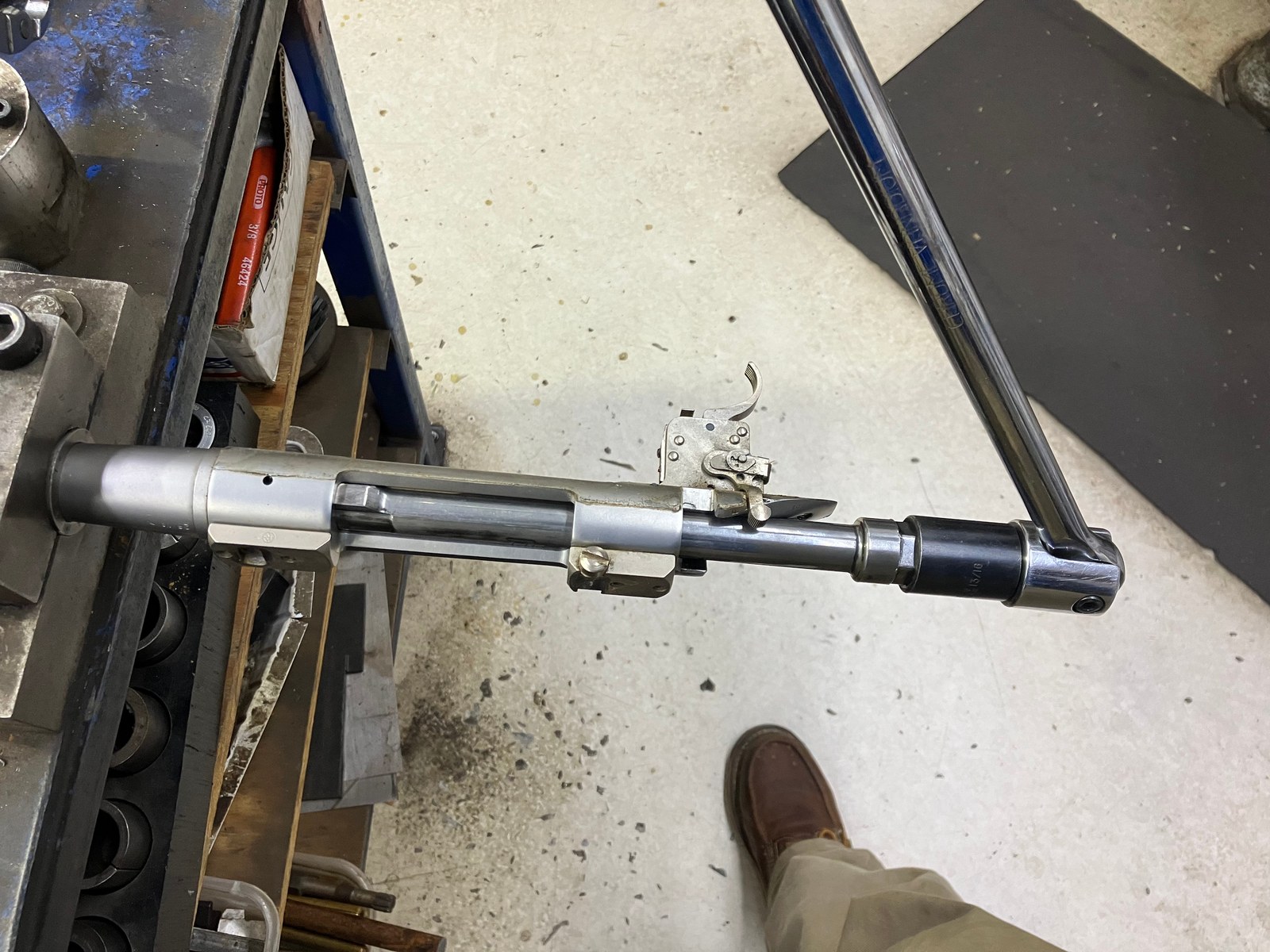
Action wrench on the action while the barrel is held in a barrel vise
2. Ken uses an action wrench to remove the barrel from the action.
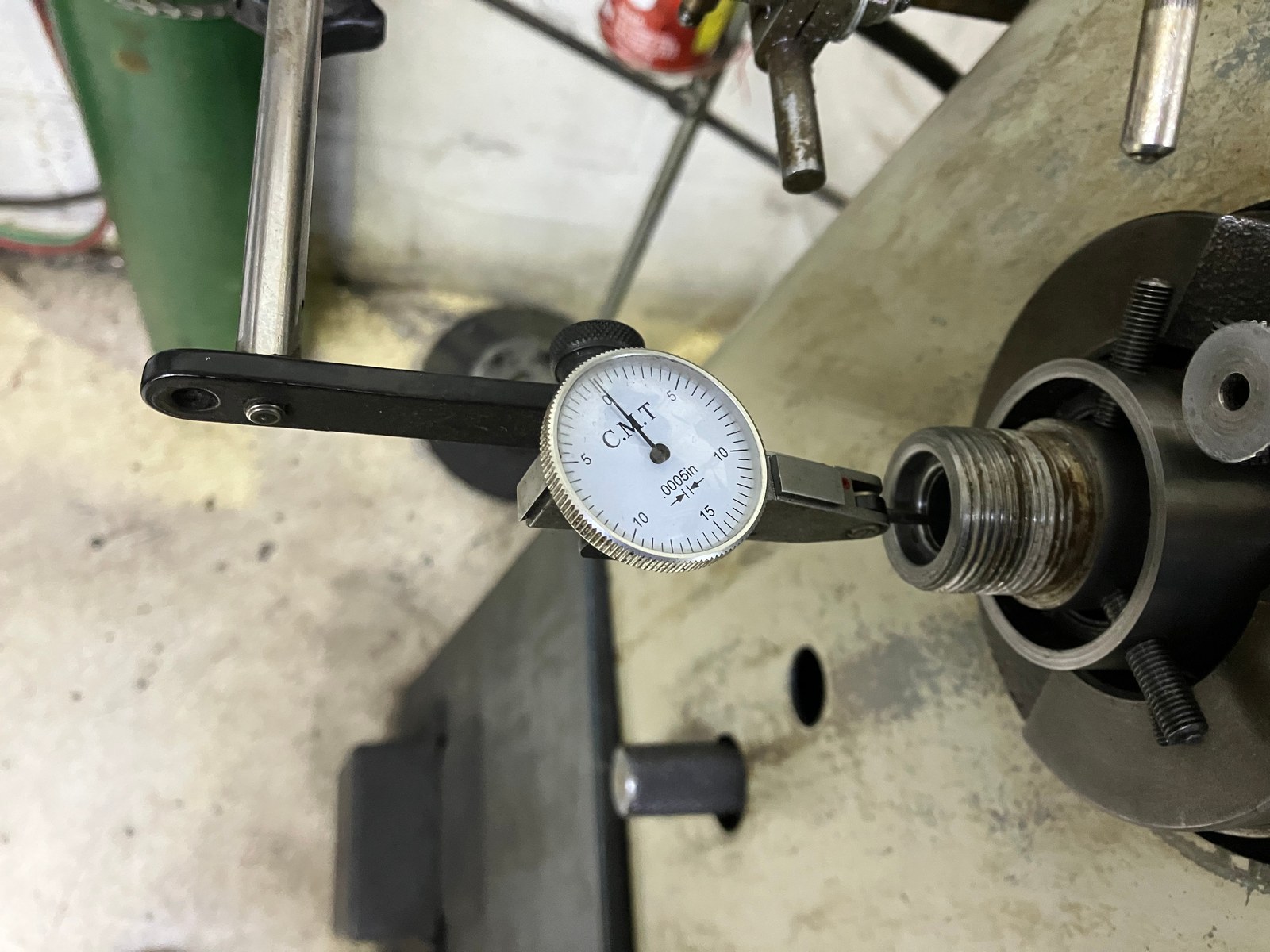
Dial indicator on the chamber end of a barrel fastened in the lathe
3. Once the barrel and the action are separated, he carefully inserts the barrel into the lathe, fastens it, and indicates both ends so the threads will be concentric to the bore when cut. He is indicating the chamber end of the barrel in this photo.
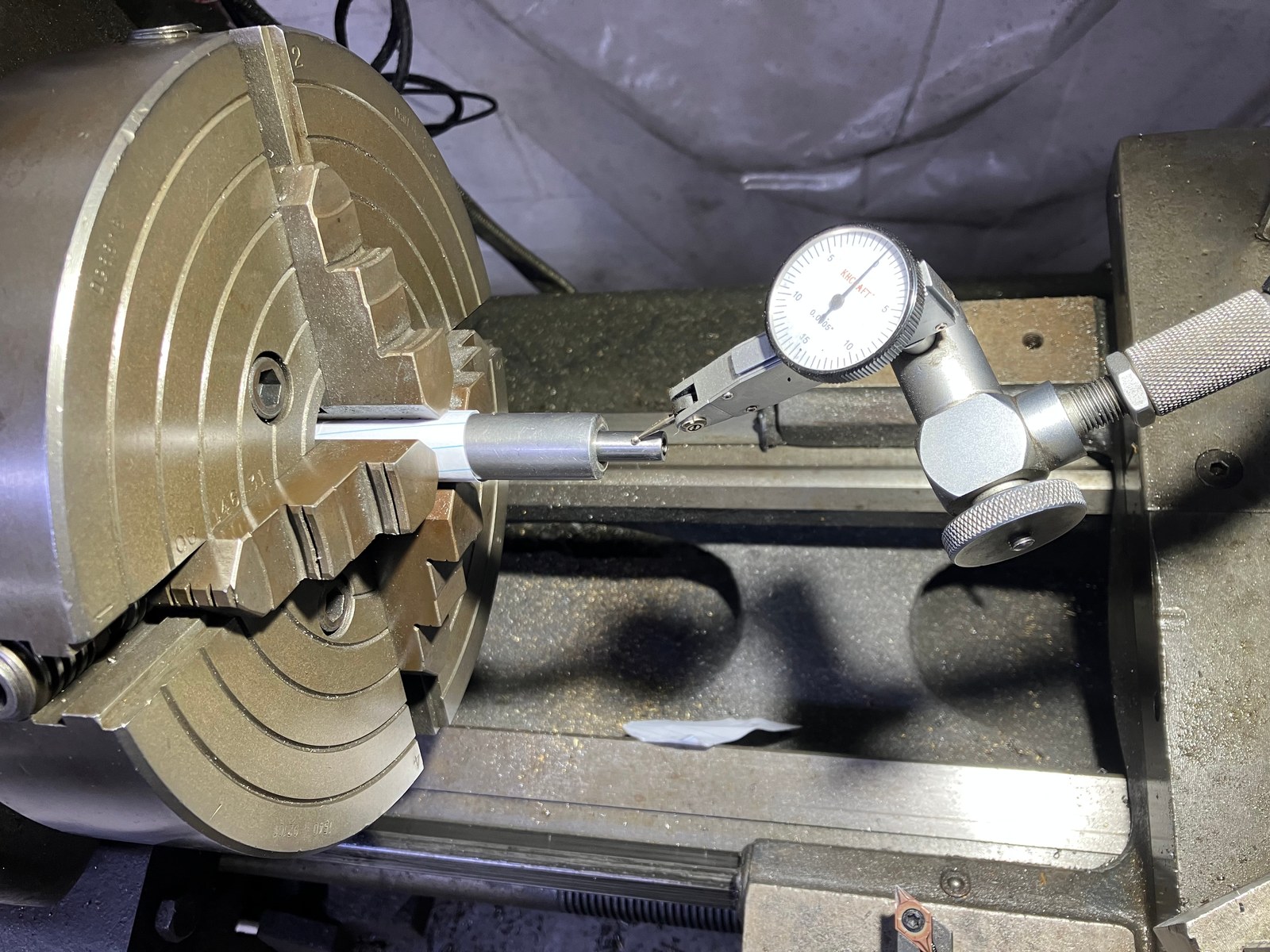
Indicating the muzzle end of a barrel in the lathe with a bore-diameter alignment rod
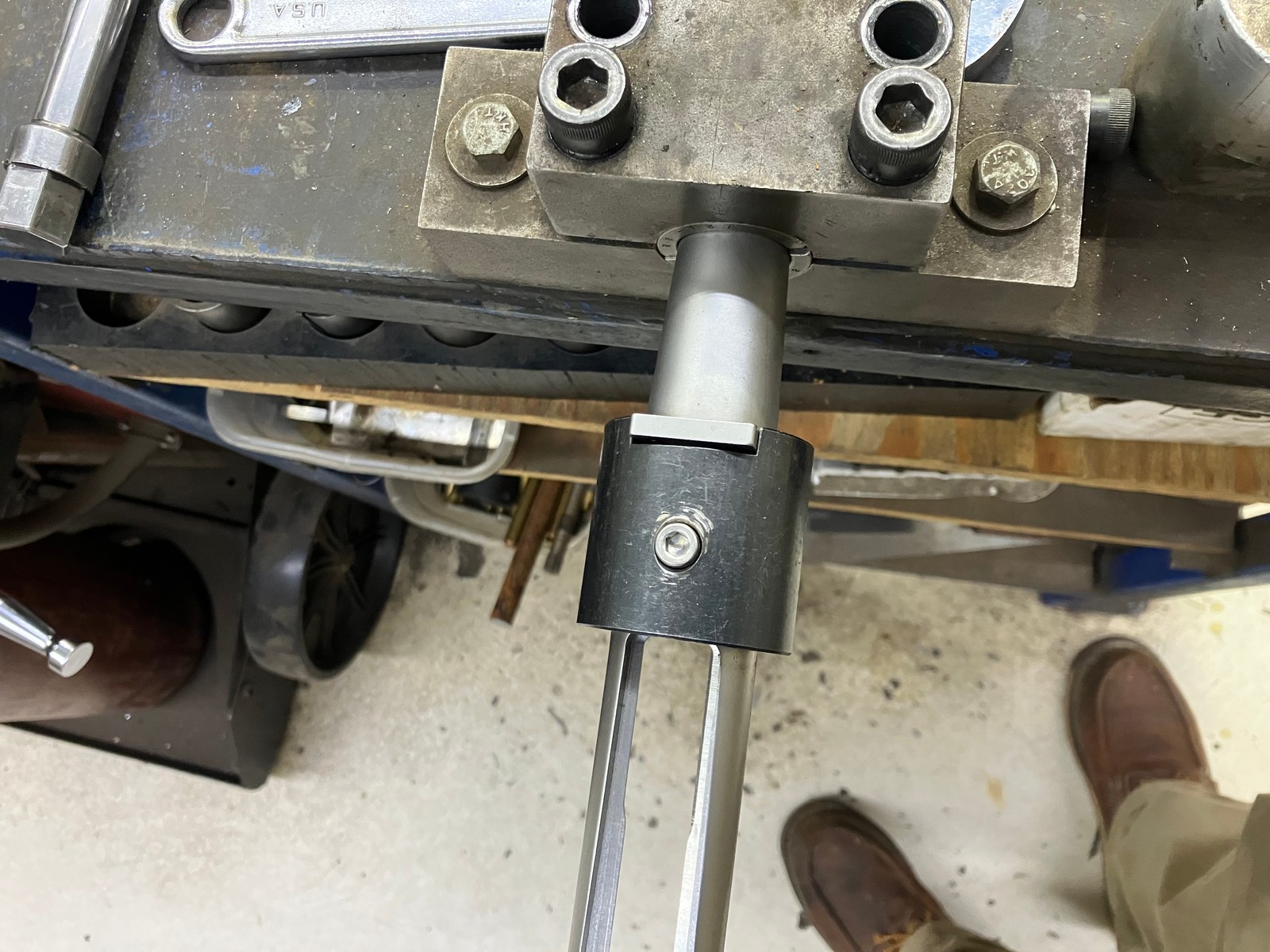
4. Now he is indicating the muzzle end with an alignment rod that matches the bore diameter.
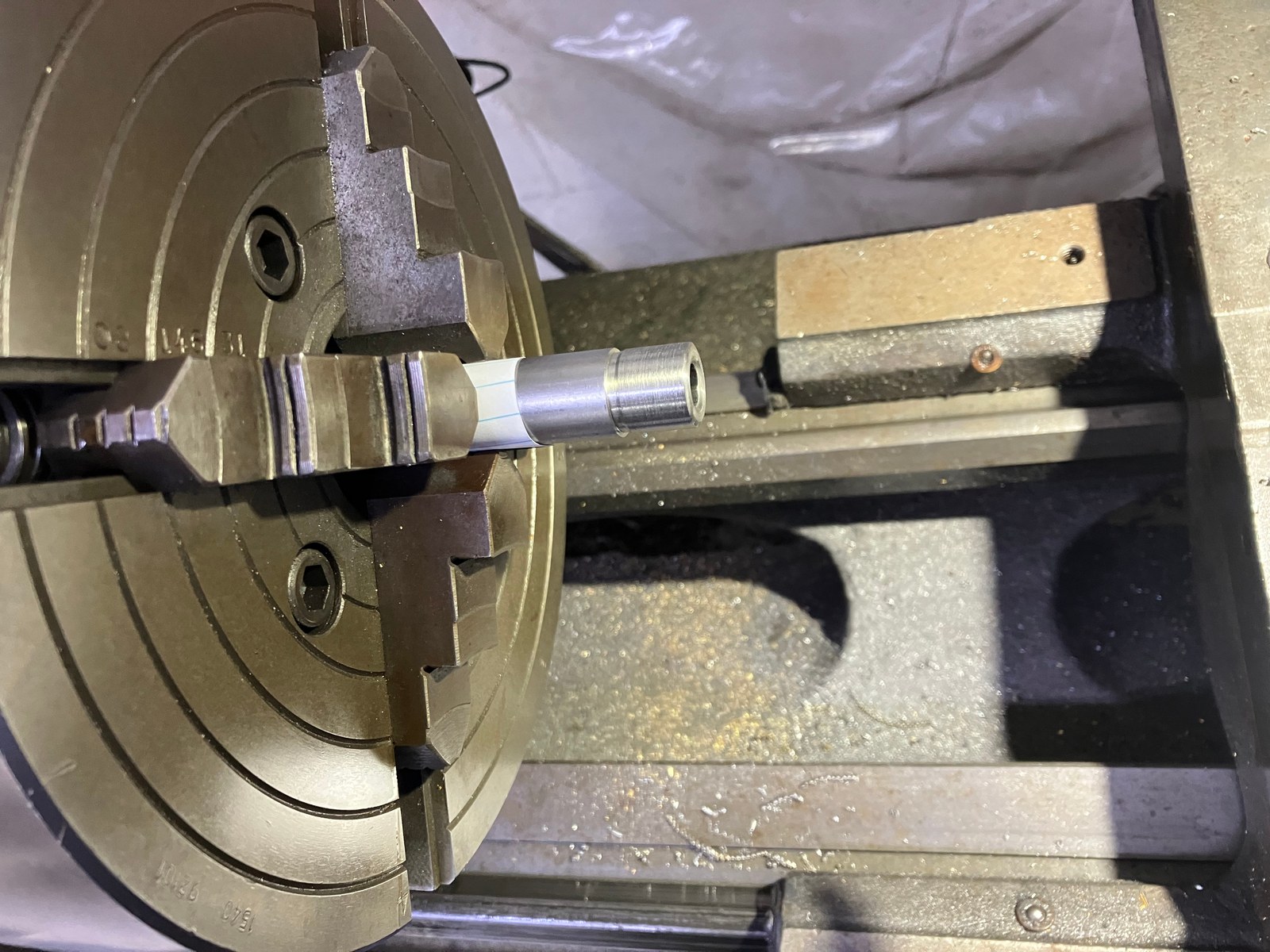
Lathe turning a barrel muzzle down to a 5/8 inch thread diameter
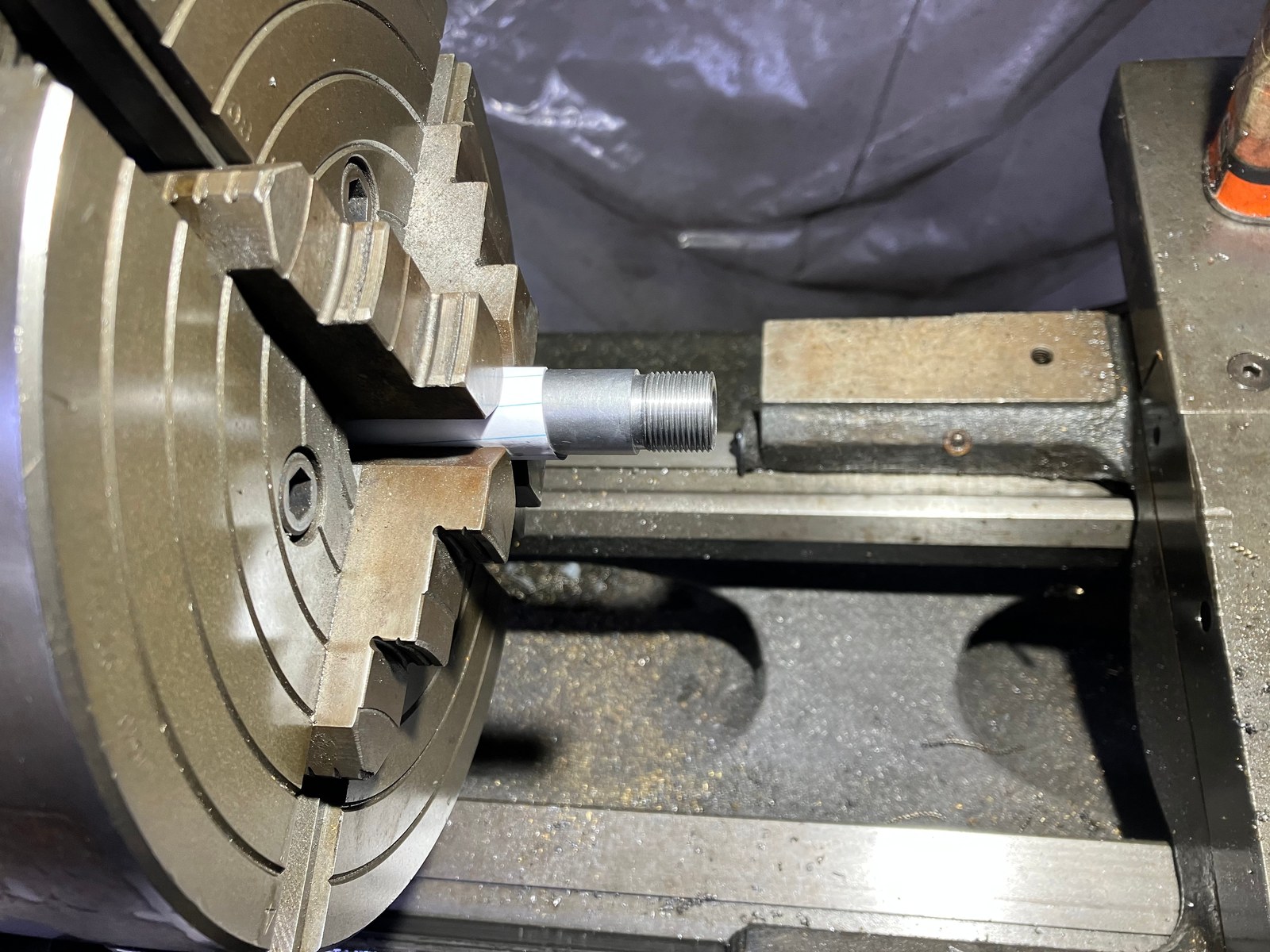
5. Now it is time to activate the lathe. First, he turns down the diameter of the barrel to the requested thread diameter. In this case, the diameter we need is 5/8".
Cutting 24 TPI threads on a barrel muzzle in the lathe
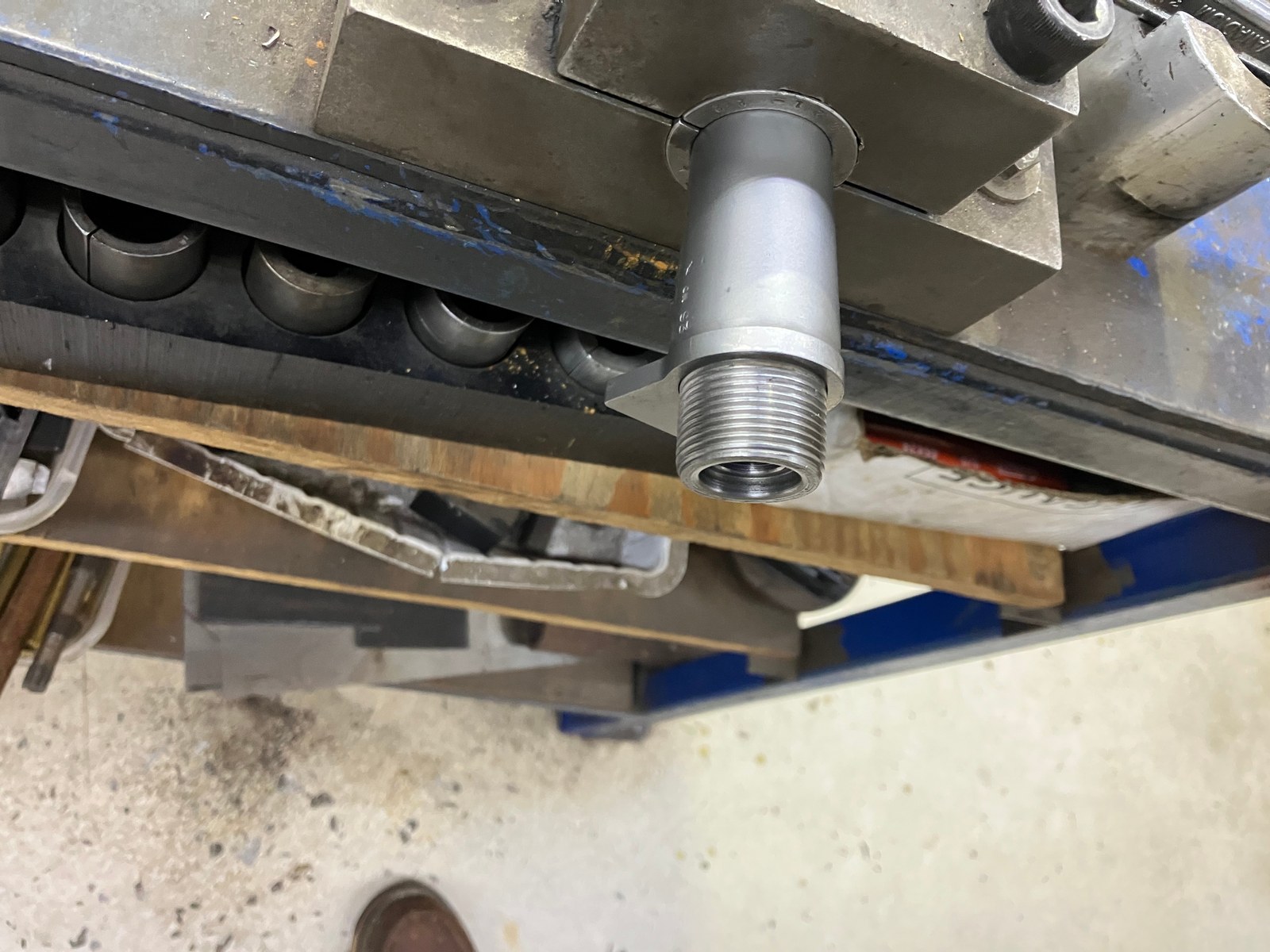
6. Next, he begins cutting the threads to the requested pitch. This thread pattern is 24 TPI, so the finished product will be 5/8"-24, the most common thread specification for .30 caliber suppressors.
Cleaning muzzle threads, the barrel shoulder, and both sides of the recoil lug before the barrel goes back on the action
7. Threading is now complete, and Ken removes the barrel from the lathe and returns it to the barrel vise to reinstall the barrel to the action. First, the threads are thoroughly cleaned, along with the barrel shoulder and both sides of the recoil lug, so debris cannot interfere with the reinstallation.
Special tool aligning the recoil lug so the action fits back into the stock
8. Next, Ken uses a special tool to correctly align the recoil lug so the action will fit precisely back into the stock.
Alignment rod run from the closed bolt through a SilencerCo Harvester shop suppressor
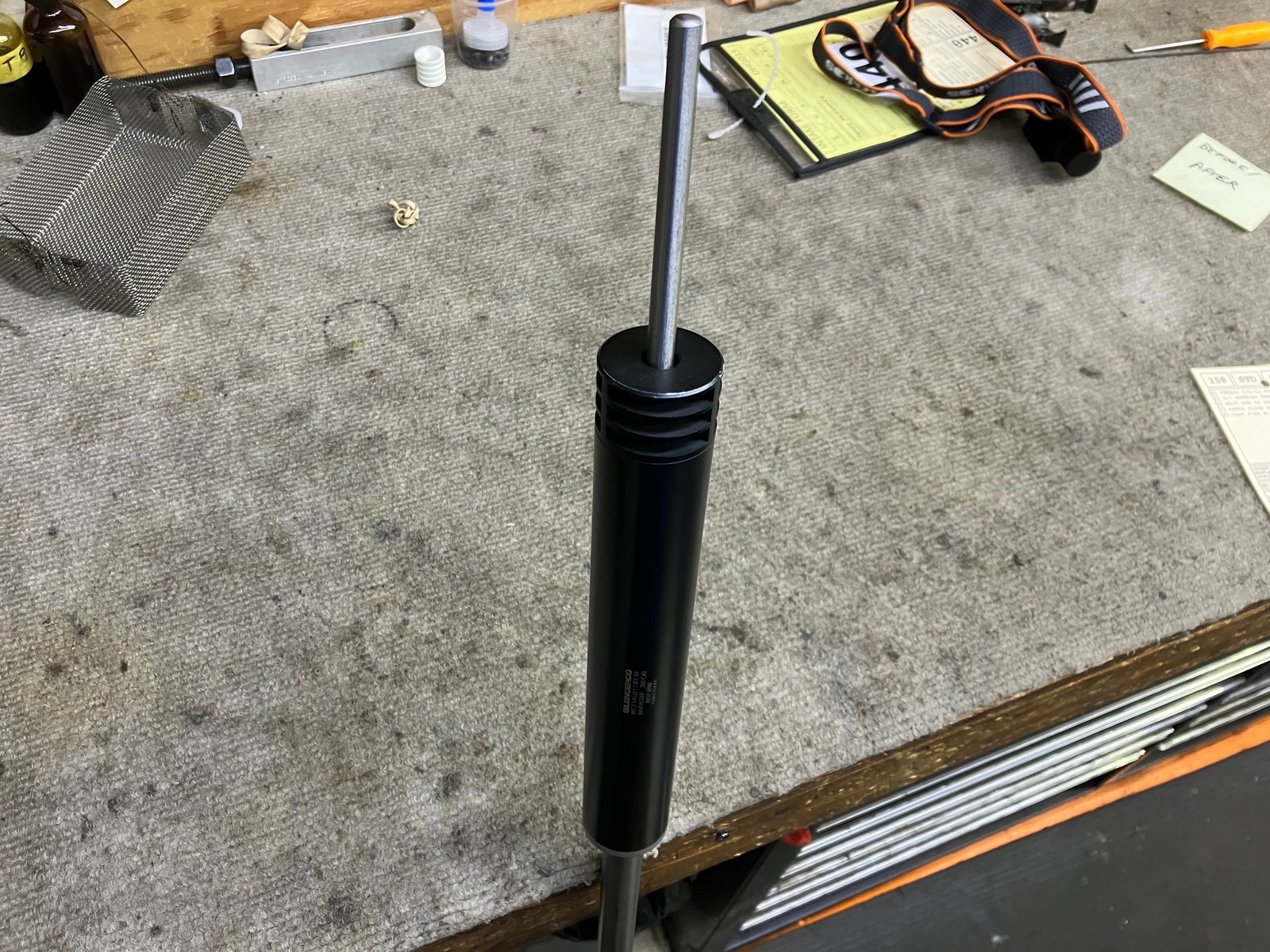
9. Once the action is reinstalled, the bolt is closed. We thread on the shop suppressor (we intentionally use an older SilencerCo Harvester, which is longer than most modern-day suppressors, for greater precision) and then run an alignment rod from the bolt out the end of the suppressor to check that the rod is down the centerline of the bore and not favoring one side or the other.
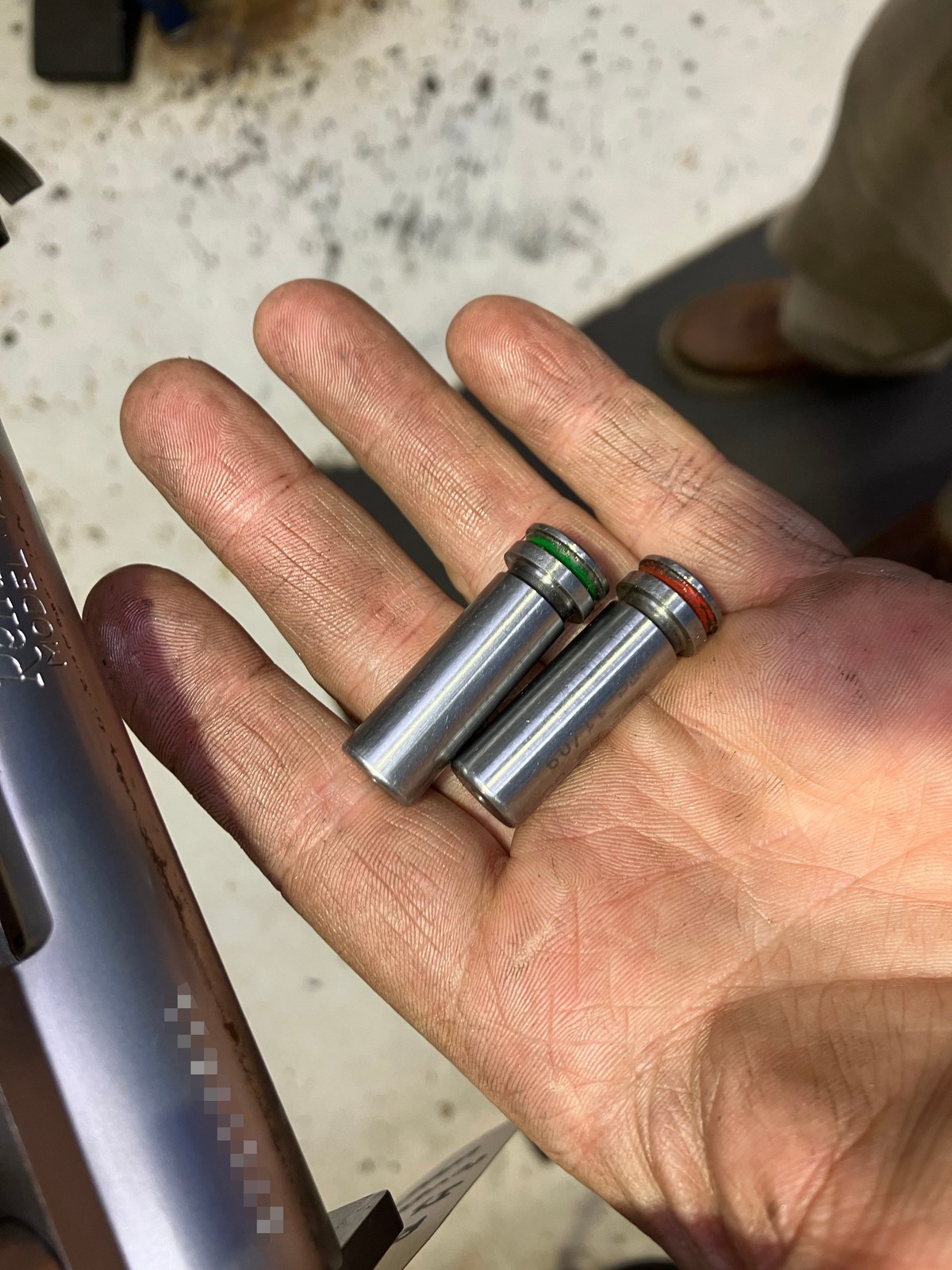
Headspace gauges used to confirm the barrel is installed correctly, with the serial obscured
10. For common calibers, we also check the headspace with headspace gauges to make sure the barrel is correctly installed. Customers are invited to bring headspace gauges for rare and wildcat calibers. We always encourage customers to bring 2-3 rounds of test fire ammo so that we can test fire the guns with the shop suppressor installed once the work is complete. (Photo modified to obscure serial.)
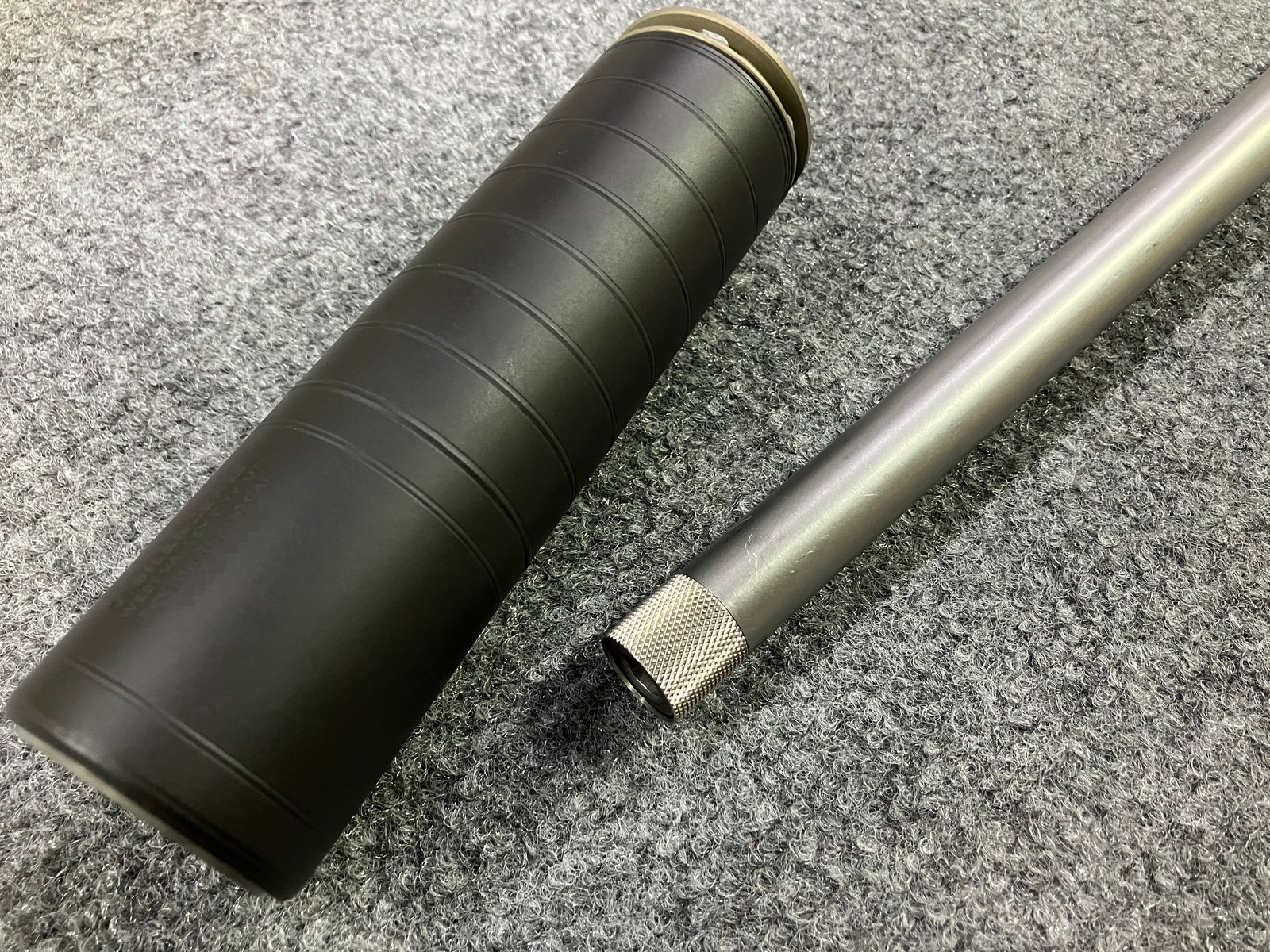
Finished threaded muzzle with a thread protector installed, serial obscured
11. Finished product with a thread protector installed. (Photo modified to obscure serial.)
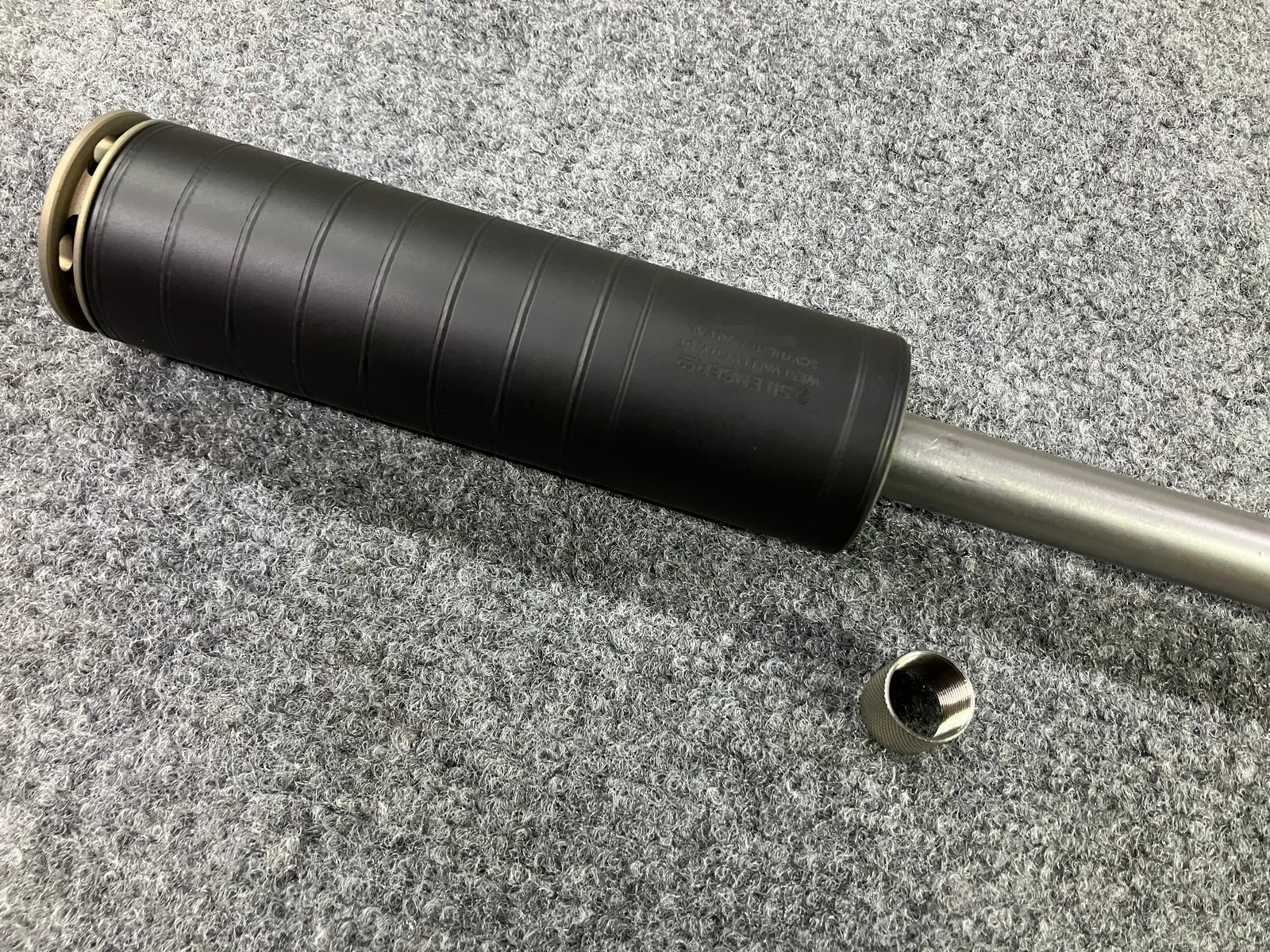
Finished barrel with the customer's suppressor installed, serial obscured
12. Finished product with the customer's new suppressor installed. (Photo modified to obscure serial.)
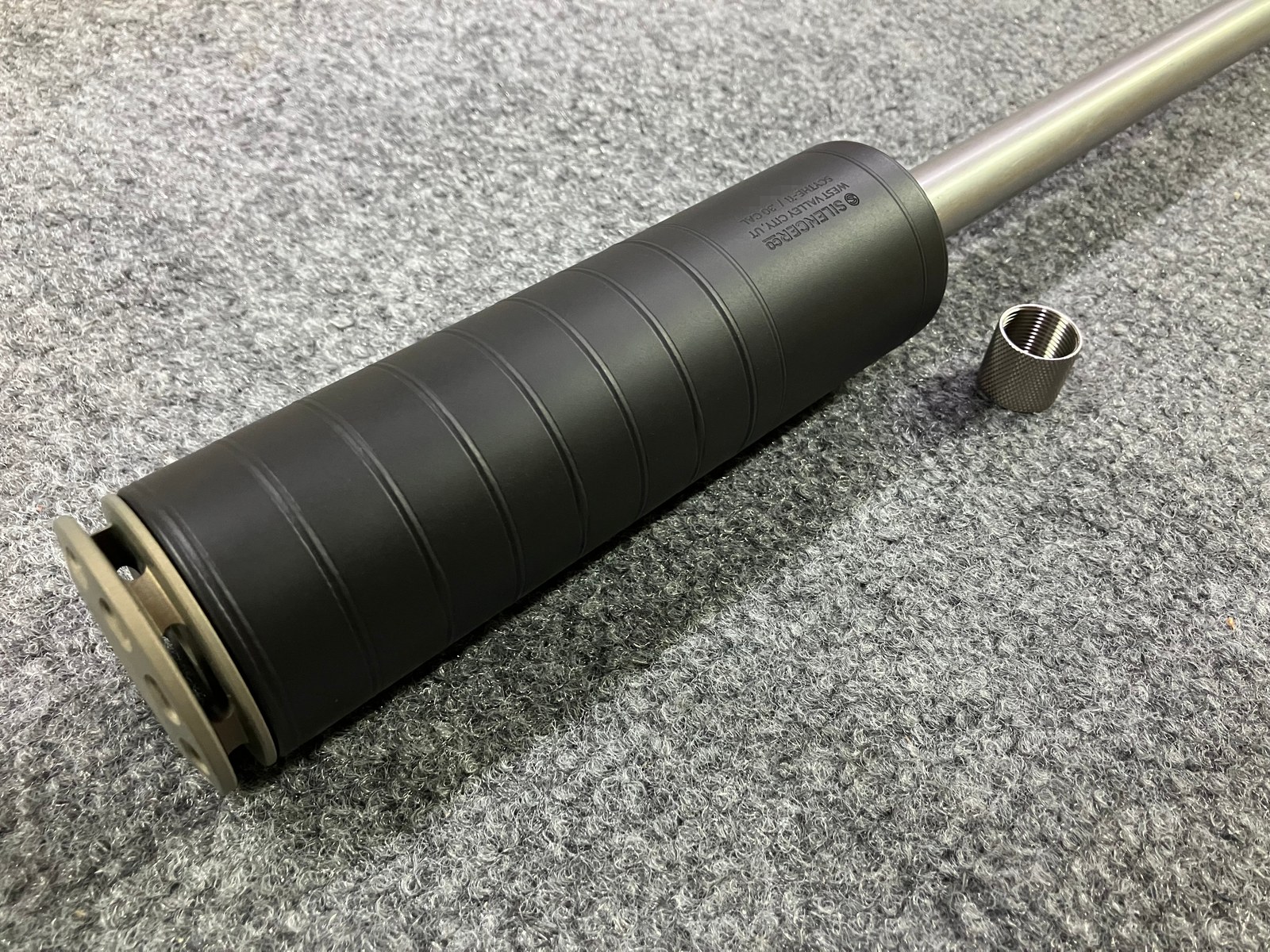
Another view of the finished barrel with the customer's suppressor installed, serial obscured
13. Another view of the finished barrel with the customer's suppressor installed. (Photo modified to obscure serial.)
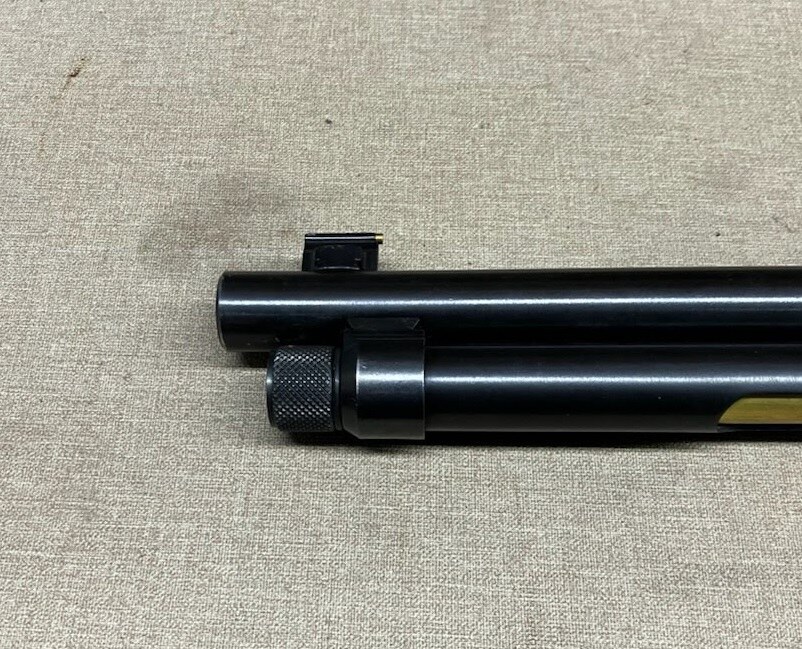
Muzzle of a tube-fed firearm before threading, with the front sight still installed and a full-length magazine cap nut
Before. Full-length magazine cap nut, barrel not threaded yet, and the front sight still installed.
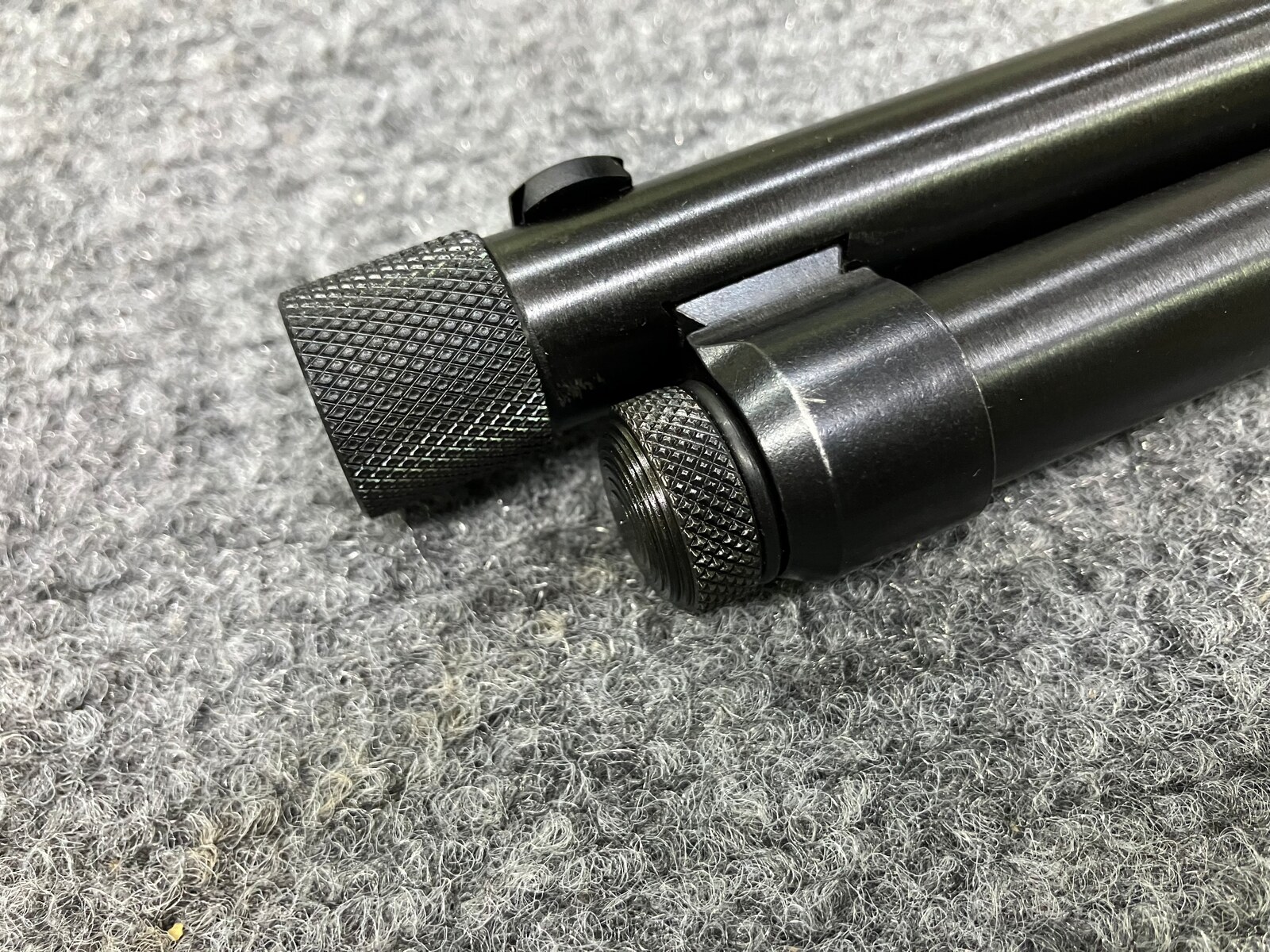
Muzzle of a tube-fed firearm after threading, with a knurled thread protector and a shortened magazine cap nut
After. Ken shortened the magazine cap nut so it would clear the suppressor threads. Shortening the cap nut runs around $40. He also removed the front sight and installed a slot filler blank, which is $20. Barrel removal and threading on this job was $150, on top of that work.

Threaded collar (shoulder expander)

Some barrels are not thick enough at the muzzle to leave a full shoulder for the suppressor to tighten against. When that happens, we can make a threaded collar that attaches at the back of the threads. The collar acts as a shoulder-expanding device so the suppressor has a solid surface to seat and tighten against. We typically Loctite and install the collar as part of the threading job. That is usually about $60 extra. We will confirm whether a collar is needed before we cut.

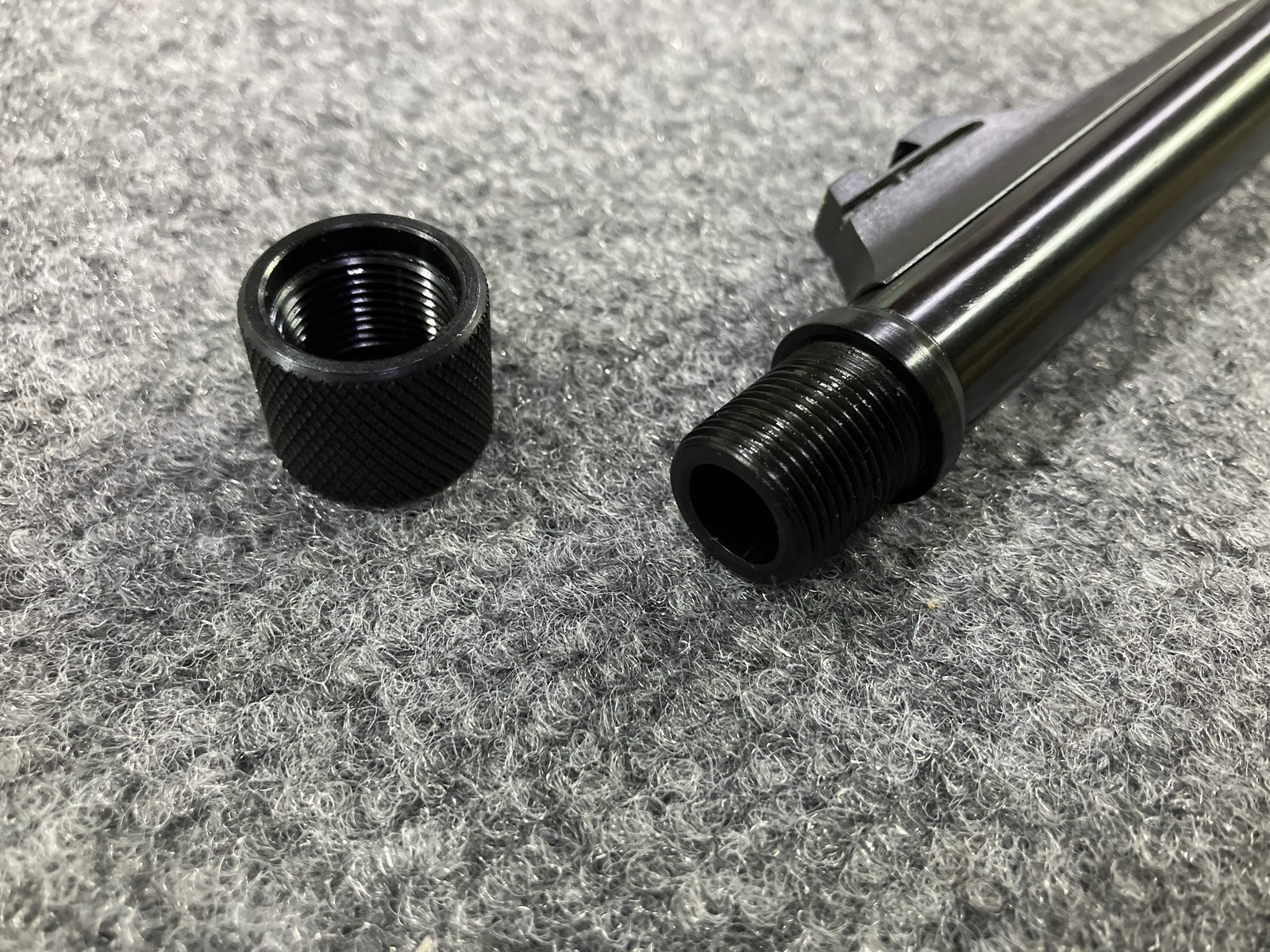
The photos below show a finished example. On this job we were also rebluing the barrel as part of a refinishing task, so we made the collar from chrome-moly steel and blued it with the barrel so the finish matched.
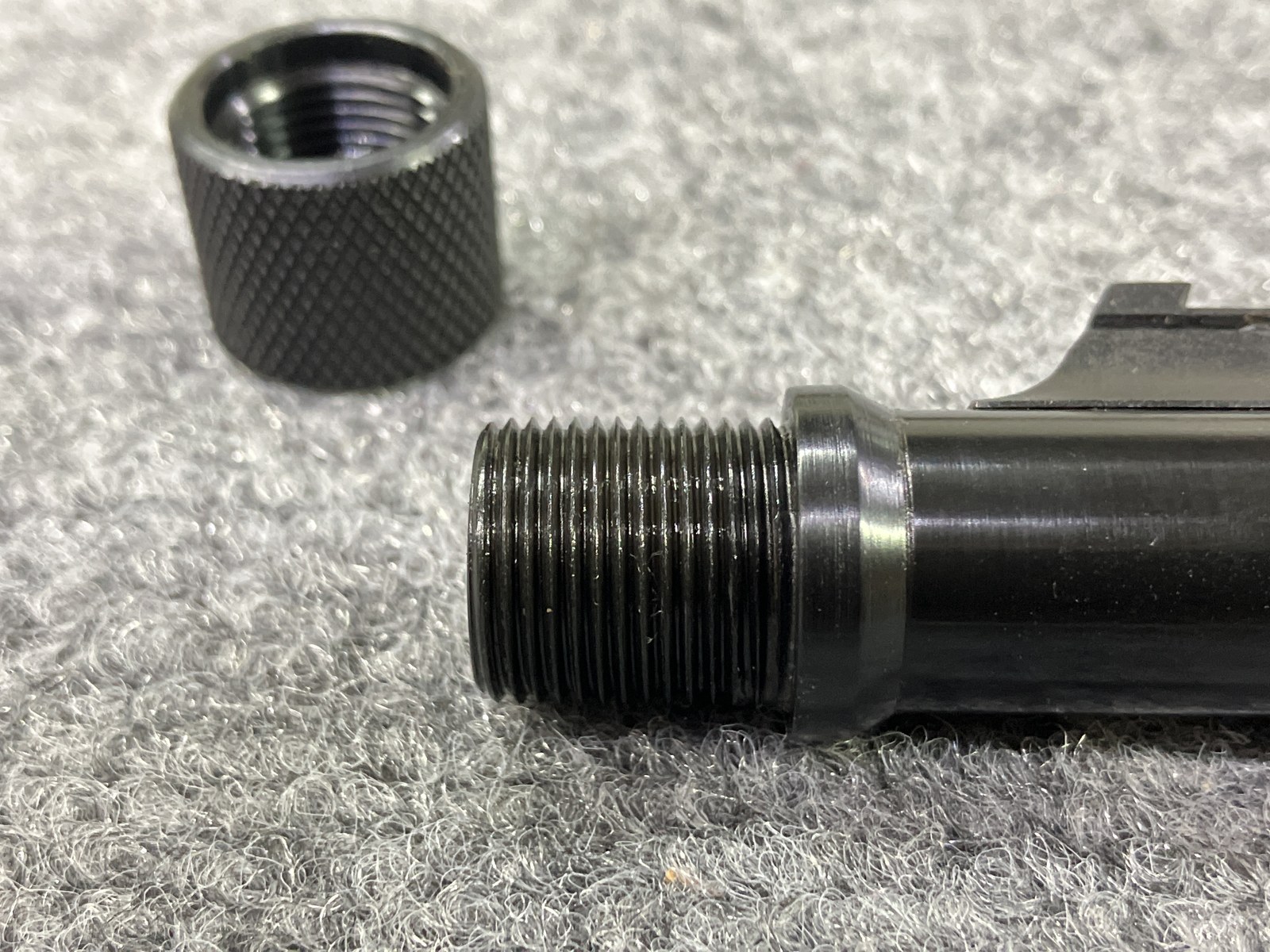
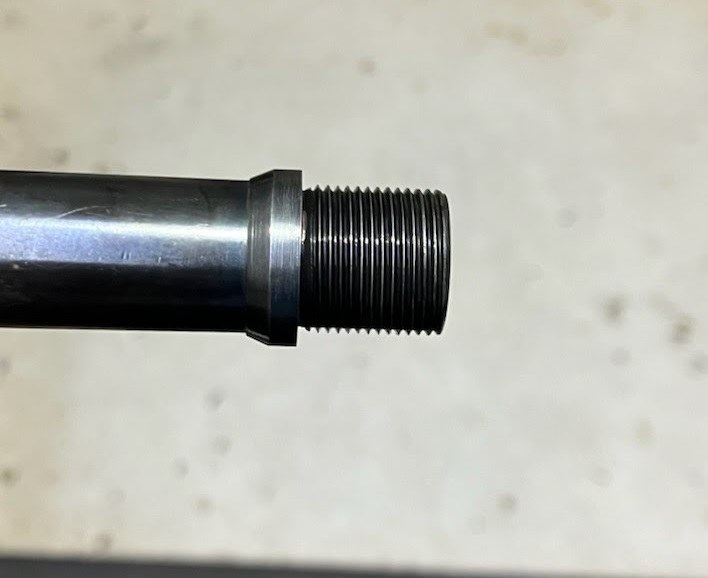
Blued muzzle with suppressor threads and a chrome-moly threaded collar forming an expanded shoulder
Threaded muzzle with a chrome-moly collar behind the threads to expand the shoulder.
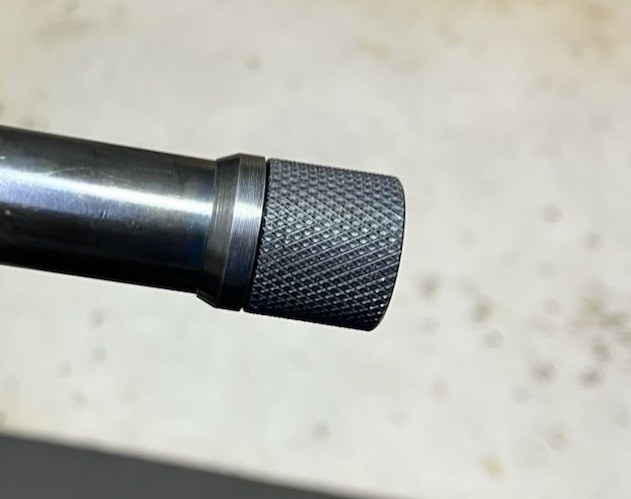
Muzzle end view of suppressor threads, blued threaded collar, and knurled thread protector
Same setup from the muzzle end, with a knurled thread protector alongside.

When a barrel is too thin to give a proper shoulder for a suppressor, Ken makes a shoulder-expanding collar. He attaches the collar with red Loctite, turns it down to match the barrel diameter, and touches up the finish so it matches the barrel. On this job the touch-up is cold blue.
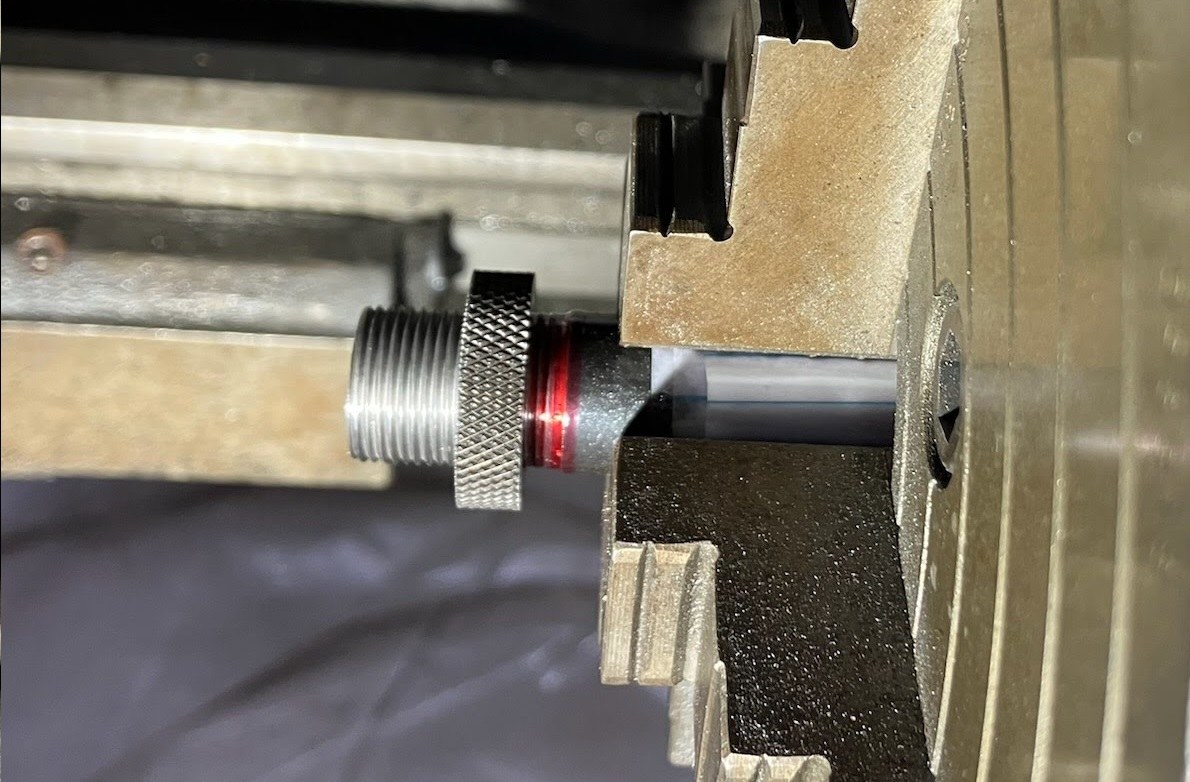
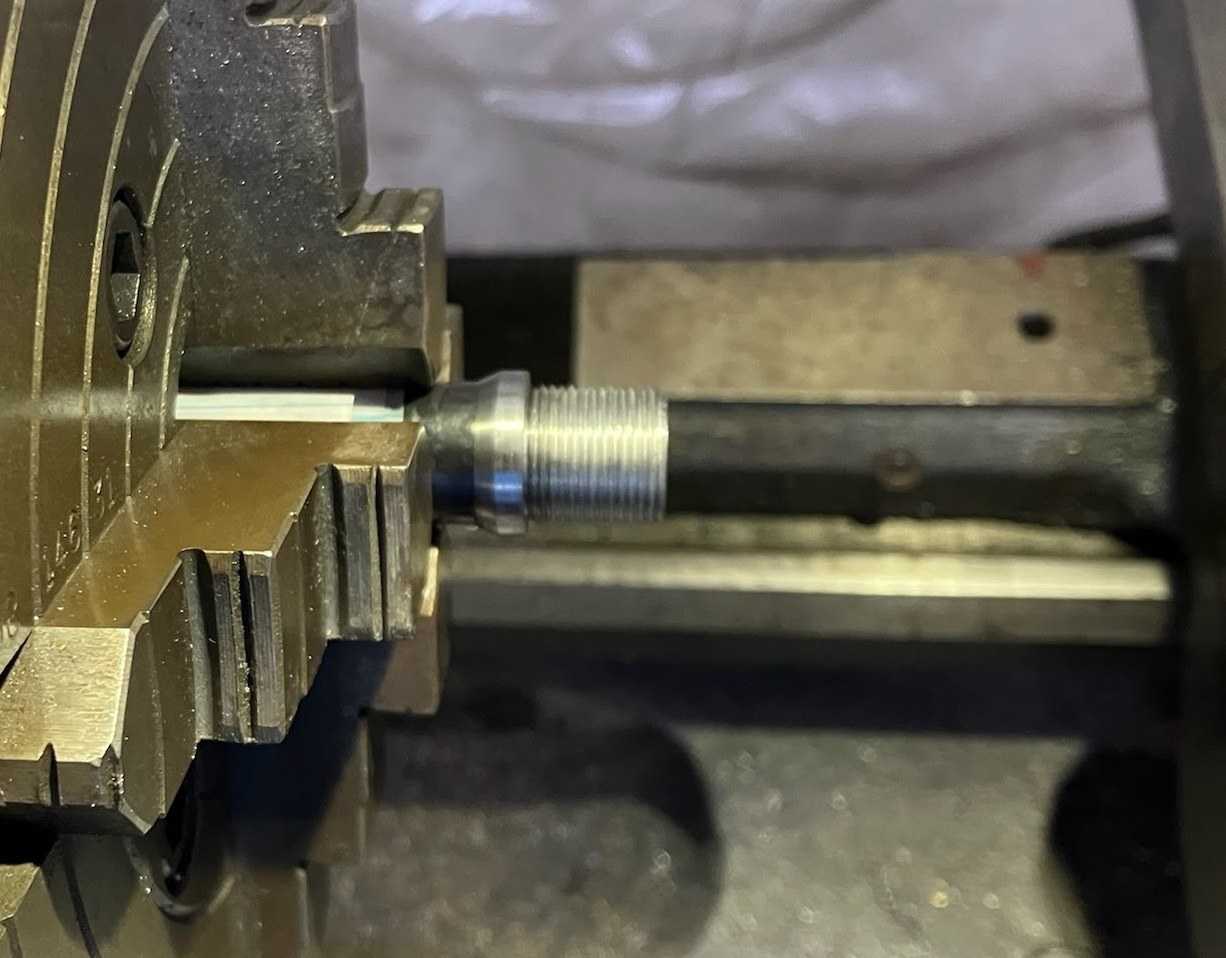
Shoulder-expanding collar in the lathe, attached with red Loctite, while a sacrificial knurled thread protector is in use
1. In the lathe. Ken is using a sacrificial knurled thread protector to make the shoulder-expanding collar. The collar is attached with red Loctite, and the red band is visible.
Shoulder-expanding collar turned down to the barrel diameter, with suppressor threads beyond the collar
2. The same collar after Ken turned it down to match the barrel diameter, with the threads beyond it.
Cold-blued shoulder-expanding collar off the lathe, matching the barrel, with threads ahead of the collar
3. Off the lathe. The collar is touched up with cold blue so the finish matches the barrel, with the threads ahead of it.
Finished cold-blued shoulder-expanding collar with a knurled thread protector installed
4. Finished collar with a knurled thread protector installed.

Pricing

  • Suppressor-grade muzzle threading: $150, includes a thread protector
  • Thread pitch adapter (when needed): usually about $40 to $60
  • Threaded shoulder collar (when needed): usually about $60
  • Custom muzzle brakes (radial or tactical): see our Muzzle Brakes page; estimated with the brake you choose

That $150 figure covers suppressor-grade threading on most models, including removing and reinstalling the barrel when needed, plus a thread protector. Brake prices come from the maker. Prices assume payment by cash or check unless we note otherwise. Lead times follow our general repair windows on the home page lead times table unless we give a different estimate for your job.

What to bring

Bring the firearm fully unloaded. Bring the suppressor or clear mount specifications when you can so we can verify thread pitch and shoulder before machining. Suppressor ownership and use remain your responsibility under federal and state NFA rules. Our role is the machining for a proper thread job. If you need an NFA transfer, see our Transfers page.

Getting started

Call or text 336-694-5739, or email [email protected]. Tell us the make, model, and caliber, and what you are mounting. We will confirm we can cut the thread and give you a rough starting estimate.